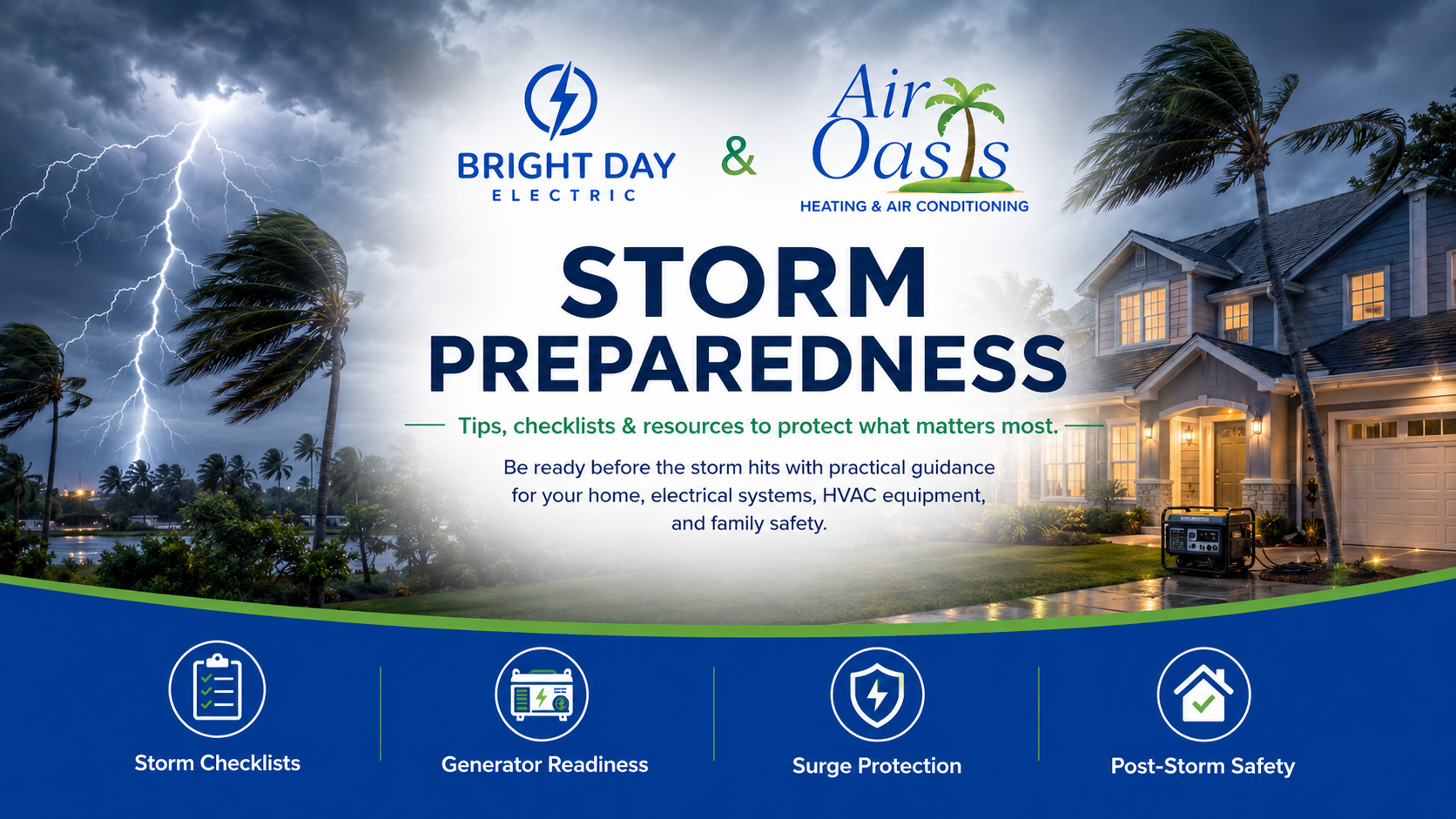
Your air conditioner is one of the most expensive systems in your home, and Florida storms can damage it in ways that are not always obvious. Power surges hit compressors and control boards. Debris gets pulled into outdoor units. Floodwater reaches electrical components. Salt air accelerates corrosion on coastal properties. The safest approach is preparation before the storm arrives and a careful check before the system goes back on after it passes.
Before Storm Season: Schedule Preventive Maintenance
The best time to find out your AC system has a weak capacitor, a slow refrigerant leak, or a clogged drain line is before storm season, not the first week of June when every HVAC company in Northeast Florida is running behind.
A pre-season maintenance visit covers refrigerant performance, electrical components, coil condition, drain line, filter, outdoor disconnect, and the physical stability of the outdoor unit. It also confirms the unit is level and secured on its pad, which matters more than most homeowners realize during high-wind events.
Clear the Area Around the Outdoor Unit Now
Before storm season starts, walk around your outdoor condenser and remove anything near it. Patio furniture, loose branches, planters, storage items, anything that wind could pick up and drive into the unit. Trim vegetation growing around the condenser. Keep enough clearance on all sides for airflow.
During an active storm, debris becomes projectile material. A condenser fin damaged by a flying object is an expensive repair. A condenser that catches a heavy branch through its top grille can be a total loss.
Should You Turn Off the AC During a Lightning Storm?
During active nearby lightning, turning the air conditioner off at the thermostat reduces risk to the compressor and control boards. Compressors are expensive. Control boards on modern systems are not cheap either, and they are increasingly difficult to source quickly after a storm when everyone in the region is making the same call.
For stronger protection, turn the AC breaker off before conditions worsen. Pre-cool the home before the storm if you have time. Do not wait until lightning is already overhead to access the panel.
Should You Cover the Outdoor Unit?
Do not cover the unit while it is running. An operating condenser requires unrestricted airflow, and a cover on a running unit will cause the system to overheat and shut itself down, at minimum.
If you cover the unit for extreme debris conditions before a storm, remove the cover before restarting the system. A tarp left on after the storm, even a loosely fitted one, blocks the airflow the unit needs and can cause compressor damage the first time it starts.
Flooding Around the Outdoor Unit
Do not restart the AC if the outdoor unit was submerged or surrounded by floodwater. This is not a judgment call. Floodwater damages motors, wiring, control components, insulation, and the refrigerant circuit in ways that are not visible from the outside.
Do not touch the unit or any electrical equipment while standing in water. Have the system inspected by a qualified HVAC technician before attempting to restart it.
If the indoor air handler or the ductwork was exposed to floodwater, that is a separate problem and a serious one. Running a contaminated air distribution system through the home spreads whatever the floodwater carried. Mold, bacteria, sediment. That inspection needs to happen before the system runs.
Power Outages and Restart Safety
Turn the system off at the thermostat during a power outage. When utility power returns, wait a few minutes before restarting. The electrical conditions during power restoration can be unstable, and giving the system a moment to stabilize is worth it.
If the breaker trips when the AC restarts, do not reset it more than once. A breaker that keeps tripping is protecting the system from something. Reset it once. If it trips again, leave it off and call for service.
If the unit hums but does not start, smells burnt, blows warm air only, or makes noises it did not make before the storm, shut it off and call. Those are not conditions to run through.
After the Storm: Check Before You Restart
Before turning the system back on after a storm, do a quick visual walk-around. Look for branches or debris on or inside the outdoor unit. Check for dents, displaced panels, or shifted position on the pad. Confirm there is no standing water around the unit. Step inside and check the area around the air handler for any sign of water intrusion. Check the indoor thermostat.
If everything looks right, restart normally and listen for the first few minutes. Any grinding, rattling, or unusual sound in the first few minutes after startup warrants a call.
When to Call for HVAC Service
Call if the unit was flooded, the breaker trips on restart, the outdoor fan does not spin, the system blows only warm air, there is a burning smell, the unit is unusually loud after the storm, you see damaged wires or refrigerant lines, or the indoor air handler or ductwork may have been exposed to water.
After a severe storm, a quick inspection is worth more than forcing a system back on and finding out two weeks later that the compressor was already failing when you restarted it.
Common questions
Frequently asked questions
What should I know before storm season: schedule preventive maintenance?
The best time to find out your AC system has a weak capacitor, a slow refrigerant leak, or a clogged drain line is before storm season, not the first week of June when every HVAC company in Northeast Florida is running behind.
What should Jacksonville property owners know about clear the area around the outdoor unit now?
Before storm season starts, walk around your outdoor condenser and remove anything near it. Patio furniture, loose branches, planters, storage items, anything that wind could pick up and drive into the unit. Trim vegetation growing around the condenser. Keep enough clearance on all sides for airflow.
Should You Turn Off the AC During a Lightning Storm?
During active nearby lightning, turning the air conditioner off at the thermostat reduces risk to the compressor and control boards. Compressors are expensive. Control boards on modern systems are not cheap either, and they are increasingly difficult to source quickly after a storm when everyone in the region is making the same call.
Check your AC before or after severe weather.
Air Oasis Heating and Air provides pre-storm AC maintenance and post-storm HVAC inspections across Jacksonville and Northeast Florida.
About the author: Freddie Zeringue is a former publisher, journalist, and author based in Jacksonville, Florida. He spent 18 years as a Natural Awakenings franchise publisher overseeing editorial and design operations and has authored three published books. He has been a technical writer in the home service industry and venture capital space since 2016. He covers local business, trades, and community topics for Air Oasis Heating and Air based on subject matter expert Kaleb Zeringue, a recognized field authority in refrigeration, HVAC, and remote diagnostic technology credited with two patents.